
What Happens on Theory Test Day: A Step-by-Step Walkthrough
A lot of theory test nerves come from simply not knowing what the day itself involves — where to go, what to bring, what the room looks like, whether you'll find out straight away. None of it needs to be a mystery, so let's walk through it from booking to result.
Before the Day
Your theory test is booked separately from your practical test, directly through gov.uk, and currently costs £23. Chester's theory test centre is at Unit 3, Granary Wharf, Steam Mill Street, Chester CH3 5BE — worth double-checking the exact address on your own booking confirmation before you travel, since test centre locations do occasionally change and it's a genuinely unhelpful surprise to discover on the morning itself.
It's about a 6-minute walk from Chester train station, and there are a few pay-and-display car parks nearby if you're driving or being dropped off. I'd suggest building in an extra 15 minutes beyond whatever your normal journey time would be — arriving flustered from a rushed journey is the last thing you want before sitting down at the computer.
What to Bring
You'll need your photocard provisional driving licence — without it, you won't be permitted to sit the test, and you'll lose your fee, no exceptions. If you still have an old-style paper licence, you'll also need to bring a valid passport alongside it.
It's worth bringing your booking confirmation too, either printed or easily accessible on your phone, in case there's any query when you check in. Beyond that, you don't need to bring anything else — no pens, no calculator, no notes. Everything happens on the computer provided.
Arriving and Checking In
When you arrive, you'll check in at reception, where staff will verify your ID against your booking. You'll then be asked to store personal belongings — phone, watch, bags — in a locker before entering the test room, since nothing beyond what's provided is allowed at the workstation itself. This isn't about distrust specifically; it's simply a standard, consistent process applied to every candidate.
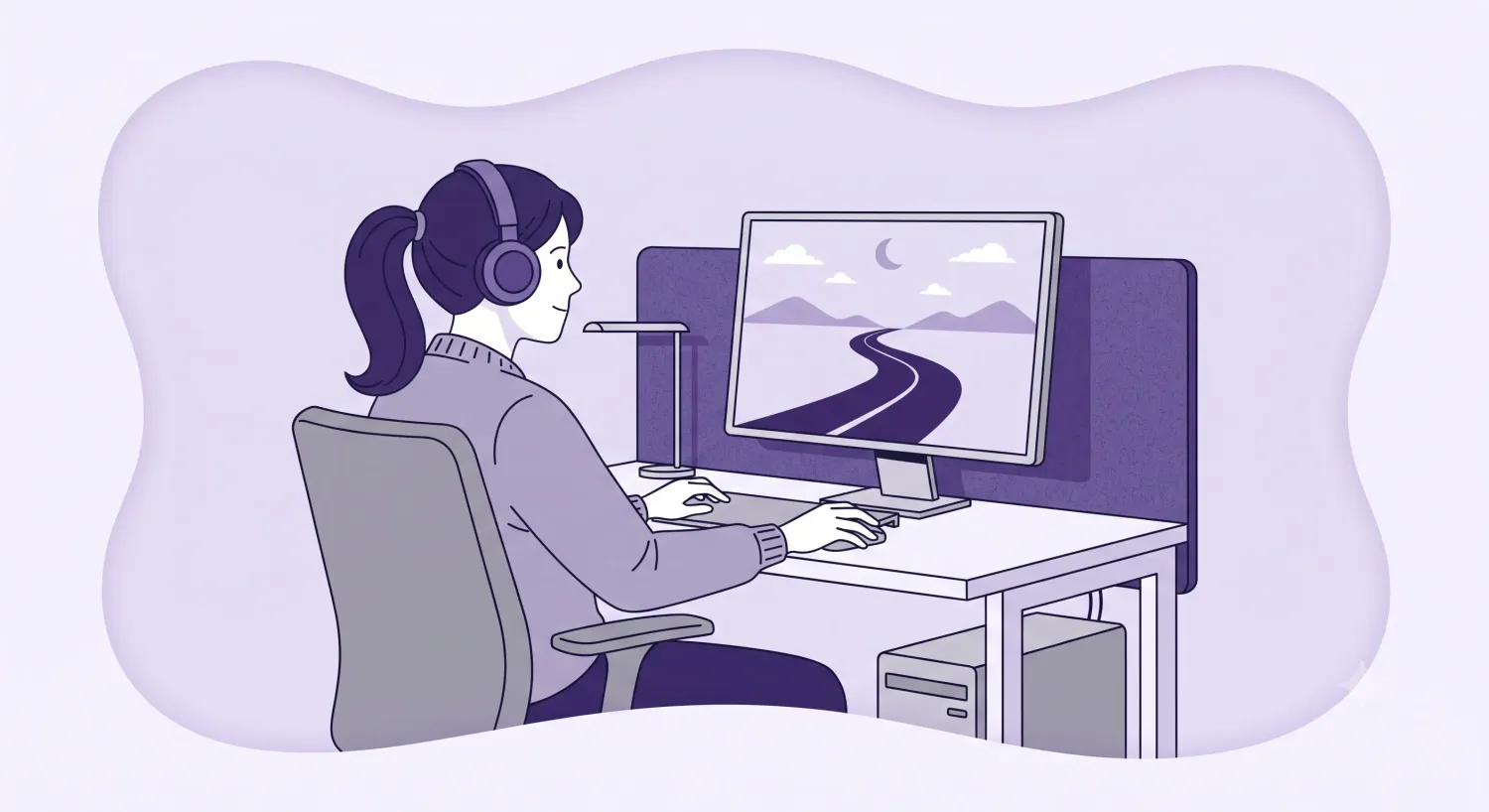
You'll be shown to an individual computer workstation, along with a headset for the hazard perception section. Before the real test begins, there's a short practice run so you can get used to the screen, the mouse, and the interface — this doesn't count toward your result, so it's a genuinely useful few minutes to settle in before anything that matters starts.
The Test Itself
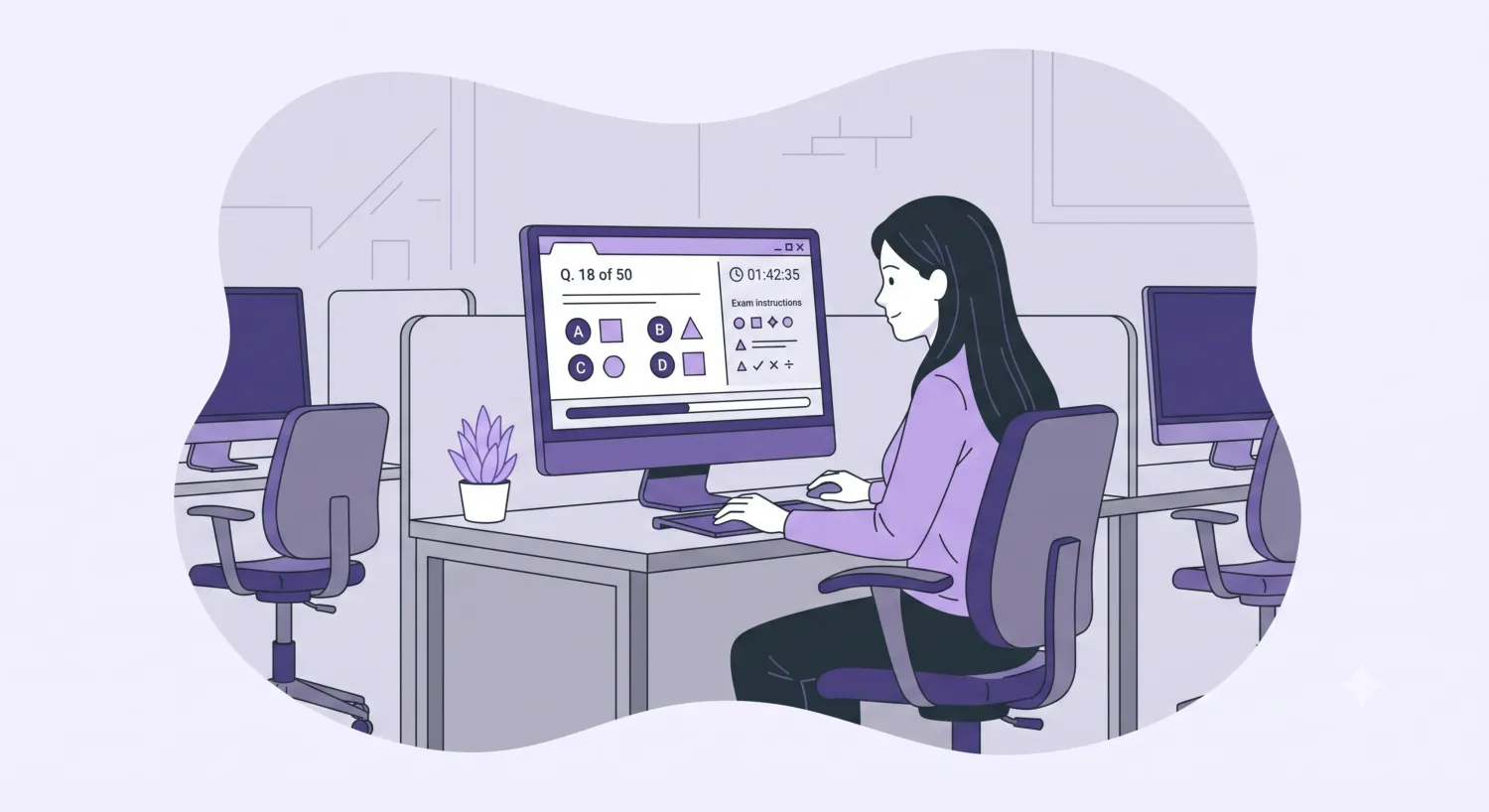
The multiple-choice section comes first — 50 questions, with up to 57 minutes available, though most people finish with time to spare. You can flag questions you're unsure of and come back to them before submitting, rather than needing to answer everything perfectly in order the first time through.
Once you've completed and submitted the multiple-choice section, you're offered a short break before hazard perception begins — you can take it or move straight on, whichever suits you better. Some learners prefer a moment to reset; others would rather keep momentum going. Neither is right or wrong.
Hazard perception follows: 14 video clips, where you click whenever you spot a developing hazard. Once you submit your final click, that's the test complete.
Getting Your Result
This is one of the better parts of the whole process: you'll usually find out whether you've passed before you've even left the building, typically within a few minutes of finishing. Staff will hand you a printed result, along with a breakdown of which topic areas you did well or less well in — useful information whether you've passed or not.
If you've passed, that's it — theory test done, and you can move on to focusing on the practical. If you haven't, there's a mandatory waiting period before you can book again, which is worth knowing about in advance rather than discovering in a moment of disappointment; I've written separately about what to do if this happens to you: Failed Your Theory Test? What to Do Next.
A Few Things Worth Knowing in Advance
❖ You can't bring a support person into the test room itself
though most centres can accommodate specific accessibility needs if you contact them in advance — worth doing early if this applies to you, rather than assuming it can be sorted on the day.
❖ Being even a few minutes late can mean losing your slot entirely
with no guarantee of being fitted in later that day. Centres are understandably strict about this, since the schedule is tightly booked.
❖ The room is quiet and individual
not a big exam hall with rows of desks — each candidate has their own screen and their own pace, so there's no sense of being watched or compared to anyone else nearby.
Making the Day Feel Ordinary
Most of what makes theory test day feel intimidating is simply unfamiliarity — a room you've never been in, a process you've never gone through, rules you're not entirely sure of. Now that you know roughly what to expect, hopefully a good deal of that has eased. The test itself, once you're sat down, is really just you and a screen — no examiner watching over your shoulder, no one to feel judged by.
If you'd like to talk through anything about test day, or want help booking at a time that fits sensibly around your lessons, feel free to get in touch. No pressure, no obligation. Just a conversation about what feels right for you.
Recent Posts
Subscribe now
If you'd like our newest guides and local road updates sent directly to you, please enter your details in the form to subscribe.
BLOG CATEGORIES
WHY CHOOSE US
Steve Paddy Driving School provides professional, patient automatic driving lessons across Chester, Ellesmere Port, and the surrounding areas. We specialise in helping nervous and anxious learners build lasting confidence by delivering a stress-free, supportive journey to real driving freedom.
Created with systeme.io | © Steve Paddy 2026 All Rights Reserved | Privacy policy | Cookie Policy | Terms & Conditions