
Hazard Perception Explained: Why It Feels Harder Than It Really Is
Of the two parts of the theory test, hazard perception is the one that seems to unsettle nervous learners most, often more than the multiple-choice section, despite it technically requiring less pure knowledge.
There's something about watching a screen, knowing you're being timed on your reactions, that feels more exposing than answering a question you can quietly think through.
The good news is that hazard perception isn't really testing a mysterious, hard-to-learn skill. It's testing something you're already building every time we're out on the road together — you just haven't had it isolated and put under a spotlight before. Let's take away some of that mystery.
What You're Actually Being Asked to Do
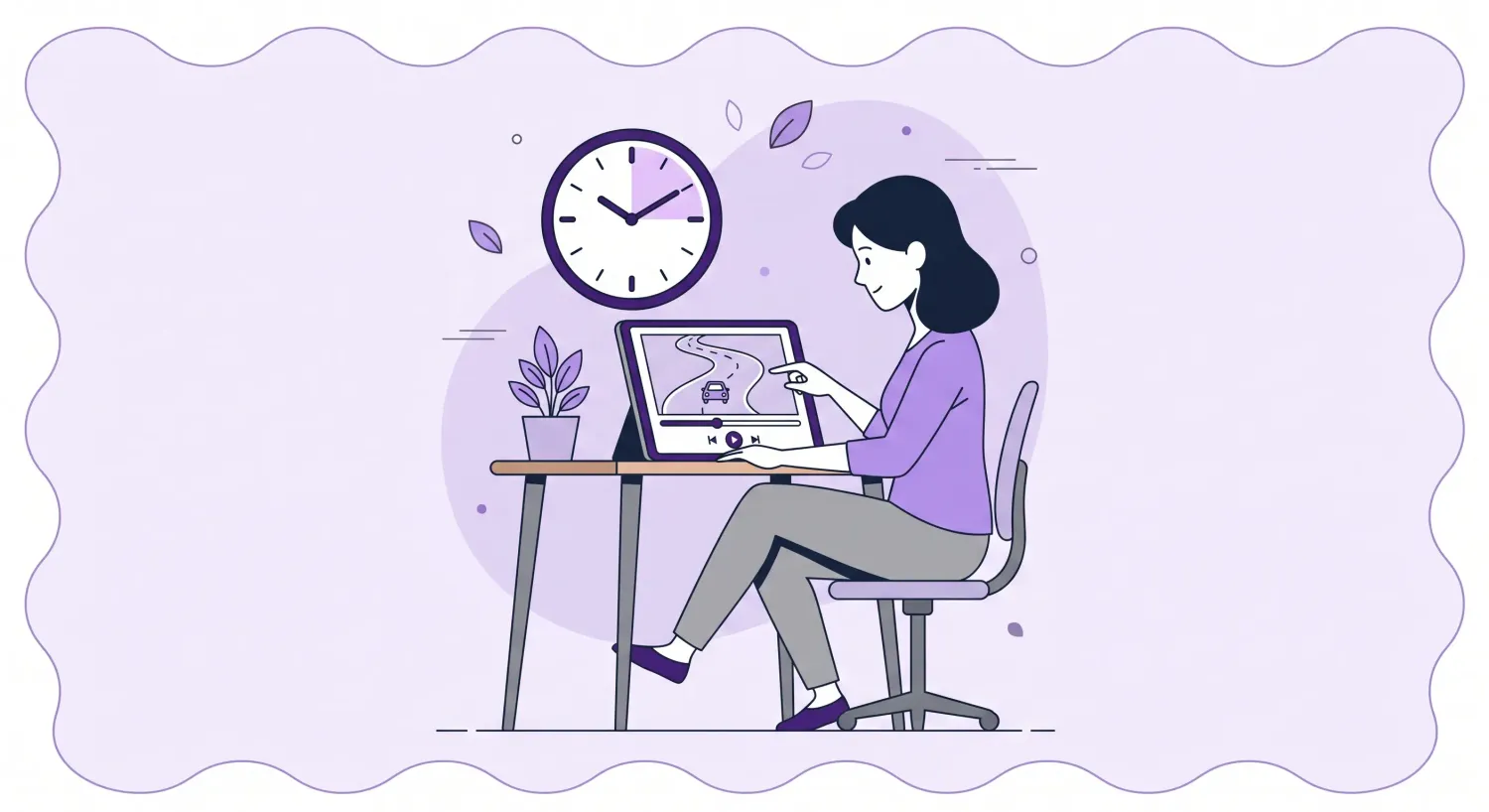
You'll watch 14 video clips, filmed from a driver's point of view, each showing ordinary road situations. Within each clip, a hazard develops — something that would cause a real driver to change speed or direction. Thirteen clips contain one developing hazard; one contains two. You click whenever you spot a developing hazard, and you're scored based on how early you click after it starts to develop, up to 5 points per hazard, for a maximum of 75. You need 44 to pass.
That's genuinely the whole task. There's no trick beyond it, and no obscure knowledge required — just noticing something forming and reacting to it.
Why It Feels Harder Than It Is
❖ You're being timed on something instinctive.
Normally, noticing a hazard while driving happens naturally, without you consciously thinking "I am now noticing a hazard." Being asked to formalise that instinct into a deliberate click, on a timer, in front of a computer, can make something ordinary feel unfamiliar and high-pressure.
❖ There's genuine ambiguity about when to click.
Nervous learners often worry about clicking "wrong" — too early, too late, or on the wrong thing entirely. This uncertainty is often worse than the task itself; once you understand how scoring actually works, a lot of that anxiety eases.
❖ It's the second half of an already tiring test.
By the time hazard perception starts, you've just finished 50 multiple-choice questions requiring sustained concentration. A little mental fatigue setting in is completely normal, not a sign you're not ready.
How Scoring Actually Works
Understanding the mechanics genuinely helps take the mystery out of this. A few key things:
❖ Click on the cause, not the effect.
If a pedestrian steps toward the kerb, about to cross, that's the developing hazard — not the moment they're actually in the road. Clicking on the earliest genuine sign of development scores higher than waiting for the situation to become obvious.
❖ There's a scoring window, not a single correct moment.
You have roughly a five-second window as a hazard develops, during which earlier clicks score more points. This means there's some room to work with, not one exact instant you have to guess correctly.
❖ Don't click rhythmically or excessively.
It's tempting, when nervous, to click frequently just to be safe. But a series of suspiciously regular clicks gets flagged, and can score you zero for that clip entirely. Genuine, considered clicks on things you've actually noticed developing will always serve you better than a defensive spray of clicks throughout.
❖ Most learners click too late, not too early.
If you're naturally cautious, this is worth knowing. The instinct to wait until a hazard is completely obvious before clicking is common, but it costs points compared to clicking at the first genuine sign something's developing.
How to Actually Practise This
❖ Use official-format clips, not random footage.
Practice clips built specifically for hazard perception preparation — including the official DVSA app — mirror the real scoring format. Generic dashcam footage from elsewhere online won't train the same skill, since it isn't built around the same developing-hazard structure.
❖ Practise in short, regular sessions.
Twenty minutes a day across a couple of weeks tends to build this skill more effectively than one long session shortly before your test. It's a timing skill as much as an observation one, and timing improves through repetition.
❖ Review your own patterns.
If you're consistently scoring low on clips with certain types of hazard — pedestrians, cyclists, parked cars pulling out — that's useful information, not just a bad result. Look specifically at whether you're clicking too late across a category, rather than treating each clip as an isolated pass or fail.
The Genuine Overlap With Real Driving
This is worth remembering when the test format feels artificial: hazard perception in the real world is exactly the skill that keeps you and everyone else on the road safe. Every time we're out together and I mention something developing ahead — a car edging out, a pedestrian glancing toward the road — we're building precisely the skill this section measures. It isn't a separate, abstract exam skill bolted onto real driving. It's real driving, isolated and put on a screen.
If anything, learners who've had more time actually out on the road, genuinely noticing developing situations as we drive, often find this section comes more naturally than pure theory-based revision alone would suggest.
A Realistic Way to Approach It
You don't need to feel completely calm about this section before you sit the test — a bit of nervous focus is completely normal and doesn't hurt your performance the way it might on the driving test itself, since there's no examiner watching you in the room. What helps most is simply understanding the mechanics well enough that you're not guessing blindly, and getting enough regular practice that the timing starts to feel natural rather than forced.
Hazard perception draws on the same underlying knowledge as several Highway Code topics, so it's worth knowing which ones tend to catch nervous learners out most: Highway Code Topics That Trip Up Nervous Learners Most.
If you'd like to talk through hazard perception practice, or want it woven into an upcoming lesson using real situations on the road, feel free to get in touch. No pressure, no obligation. Just a conversation about what feels right for you.
Recent Posts
Subscribe now
If you'd like our newest guides and local road updates sent directly to you, please enter your details in the form to subscribe.
BLOG CATEGORIES
WHY CHOOSE US
Steve Paddy Driving School provides professional, patient automatic driving lessons across Chester, Ellesmere Port, and the surrounding areas. We specialise in helping nervous and anxious learners build lasting confidence by delivering a stress-free, supportive journey to real driving freedom.
Created with systeme.io | © Steve Paddy 2026 All Rights Reserved | Privacy policy | Cookie Policy | Terms & Conditions