
Tricky Highway Code Topics That Trip Up Nervous Learners The Most
Some Highway Code topics genuinely are trickier than others, and it's not a coincidence that the same handful come up again and again when learners tell me what they got wrong on a mock test.
None of them are unreasonably difficult once explained clearly — they just tend to be taught briefly, or worded in a way that's easy to misread under pressure. Let's go through the ones I see catch nervous learners out most often.
Stopping Distances
This is probably the single most commonly underestimated topic. Stopping distance is made up of two separate parts — thinking distance and braking distance — and a lot of learners either forget this split entirely or mix up which one changes with speed versus which one changes with road conditions.
❖ Thinking distance.
This is how far you travel before you even start braking, and it increases with speed alone, regardless of weather.
❖ Braking distance.
This is how far the car travels once you've applied the brakes, and it is the part that's dramatically affected by road conditions — doubling in the wet, and increasing far more than most people expect on ice.
❖ Stopping distance.
This is the sum of thinking distance plus braking distance.
A useful way to hold onto this: thinking distance is about you reacting; braking distance is about the car and road doing the stopping. Questions often test whether you understand that these are separate, additive distances, not a single combined figure you can estimate roughly.
Priority at Unmarked Junctions
This one catches people out because it feels like it should have a clear rule, and technically it does — but it's a rule about caution rather than a fixed hierarchy. At an unmarked junction, with no signs or road markings indicating priority, no one technically has right of way. The expectation is that all drivers approach cautiously and give way as needed, based on the situation, rather than assuming their road is the "main" one.
Questions on this topic are often testing whether you understand that assuming priority is the mistake, not correctly identifying who "should" go first — because in the truest sense, nobody automatically should.
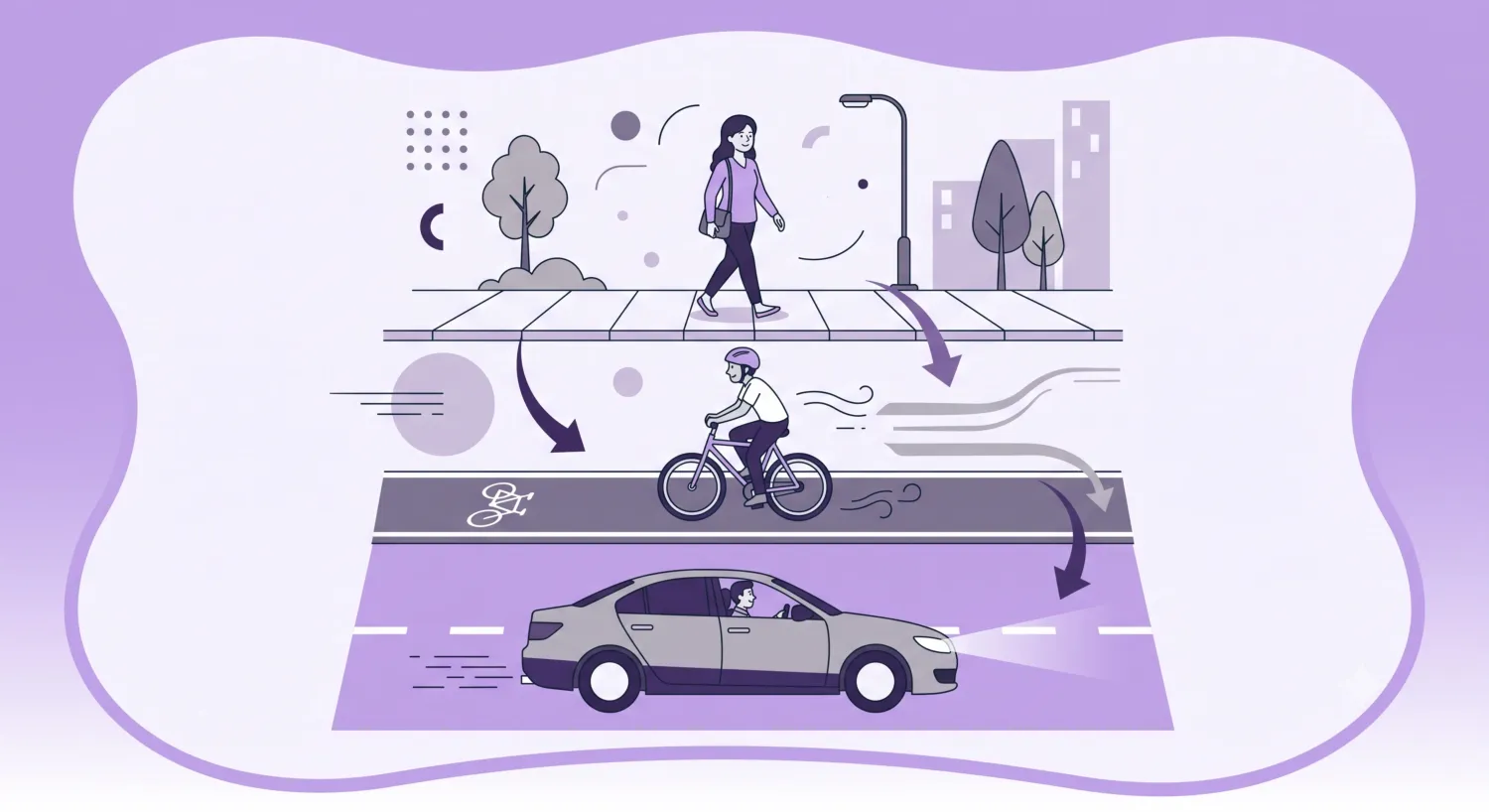
The Hierarchy of Road Users
Following an update to the Highway Code, there's now a clearer hierarchy that places greater responsibility on those who can do the greatest harm to protect those most at risk — meaning drivers hold more responsibility toward pedestrians and cyclists than the reverse, particularly at junctions and when turning.
A number of newer questions specifically test whether you understand this shift in emphasis, rather than older, more driver-centric assumptions some learners pick up informally from family members who passed their test years ago.
If someone who passed decades ago tells you confidently how a junction rule works, it's always worth double-checking against current material — road user priority guidance specifically has genuinely changed.
Box Junctions
The yellow crosshatched squares seem to cause disproportionate confusion given how simple the underlying rule actually is: don't enter a box junction unless your exit is clear, except when turning right and you're only prevented from completing the turn by oncoming traffic or other vehicles waiting to turn right. That exception is the part that trips people up — it feels like it contradicts the main rule, when it's actually a specific, sensible carve-out for a common real situation.
Overtaking Rules
Questions on overtaking often test edge cases rather than the obvious "don't overtake on a bend" scenarios — things like not overtaking approaching a pedestrian crossing, or the specific rules around overtaking cyclists with appropriate space. These edge cases are easy to miss if you've only skimmed this section, since the "big" rule feels obvious and the detail underneath doesn't.
Motorway Rules, Even Before You've Had a Lesson There
It can feel strange revising rules for roads you might not have driven on yet, but motorway rules are a full topic category in their own right, and questions do come up on lane discipline, hard shoulder use, and joining/leaving procedures.
Since 2018, learners have actually been allowed on motorways, but only with an approved driving instructor (ADI) in a dual-controlled car — private practice with a family member or friend still isn't permitted there.
If you haven't had a motorway lesson with me yet, that's completely normal at this stage, but it does mean this section of the theory test is worth deliberate revision rather than assuming it'll make intuitive sense from general driving experience alone.
Watch for "Must," "Should," and "Always"
This isn't a topic exactly, but a pattern worth knowing about. A number of questions are worded specifically to test whether you notice words like "must," "should," or "always" — since these change a question from describing best practice to describing a legal requirement. Reading quickly under time pressure, it's easy to answer based on general sense rather than the precise wording actually used, which is exactly what these questions are designed to catch.
How to Actually Approach These
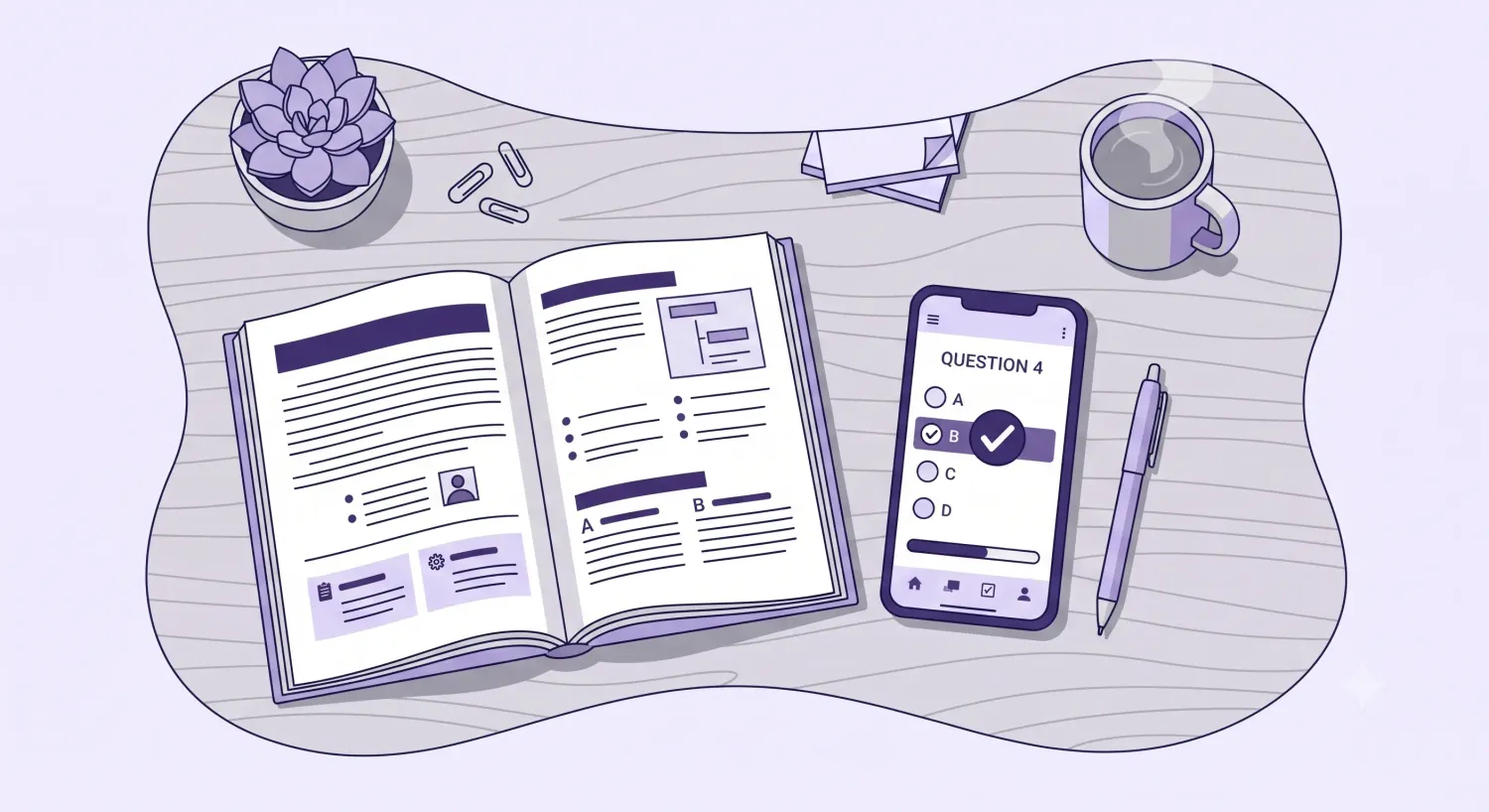
None of these topics require extra intelligence to grasp — they just benefit from a slightly slower, more deliberate read than skimming through the wider question bank. If you're using an app to revise, pay particular attention to any questions from these specific areas that you get wrong more than once, since that's usually a sign of a genuine gap rather than a one-off slip.
If any of this comes up while we're actually out driving together — a box junction, an unmarked junction, deciding how to overtake safely — I'm always glad to talk through the reasoning behind the rule in the moment, since it tends to stick far better connected to something real than read in isolation.
Once the knowledge side feels solid, the other thing worth settling is the test day process itself, so nothing about the day feels unfamiliar: What Happens on Theory Test Day.
If you'd like to talk through any of these topics, or want a lesson that deliberately covers some of the trickier junctions and situations mentioned here, feel free to get in touch. No pressure, no obligation. Just a conversation about what feels right for you.
Recent Posts
Subscribe now
If you'd like our newest guides and local road updates sent directly to you, please enter your details in the form to subscribe.
BLOG CATEGORIES
WHY CHOOSE US
Steve Paddy Driving School provides professional, patient automatic driving lessons across Chester, Ellesmere Port, and the surrounding areas. We specialise in helping nervous and anxious learners build lasting confidence by delivering a stress-free, supportive journey to real driving freedom.
Created with systeme.io | © Steve Paddy 2026 All Rights Reserved | Privacy policy | Cookie Policy | Terms & Conditions