
The Red Alert Technique: A Simple Grounding Exercise for Anxious Drivers
Over the years, I've picked up a lot of small tools that genuinely help nervous drivers feel calmer behind the wheel. One of the simplest — and one I still use with learners today — is something I call "Red Alert."
It sounds almost too simple to work, but it's one of the techniques I see make a real difference, especially for drivers whose minds tend to race ahead to worst-case scenarios rather than staying with what's actually in front of them.
What Red Alert Actually Is
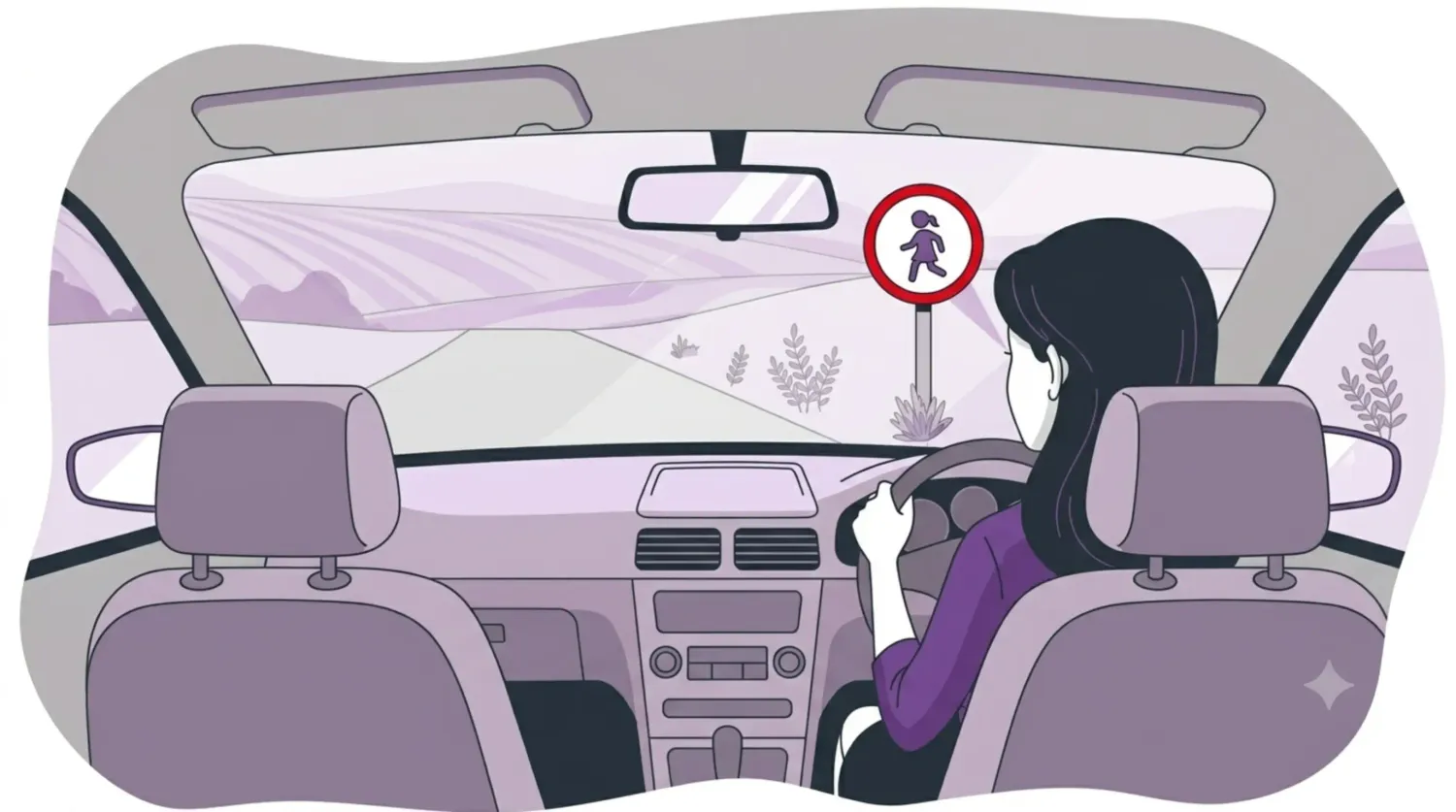
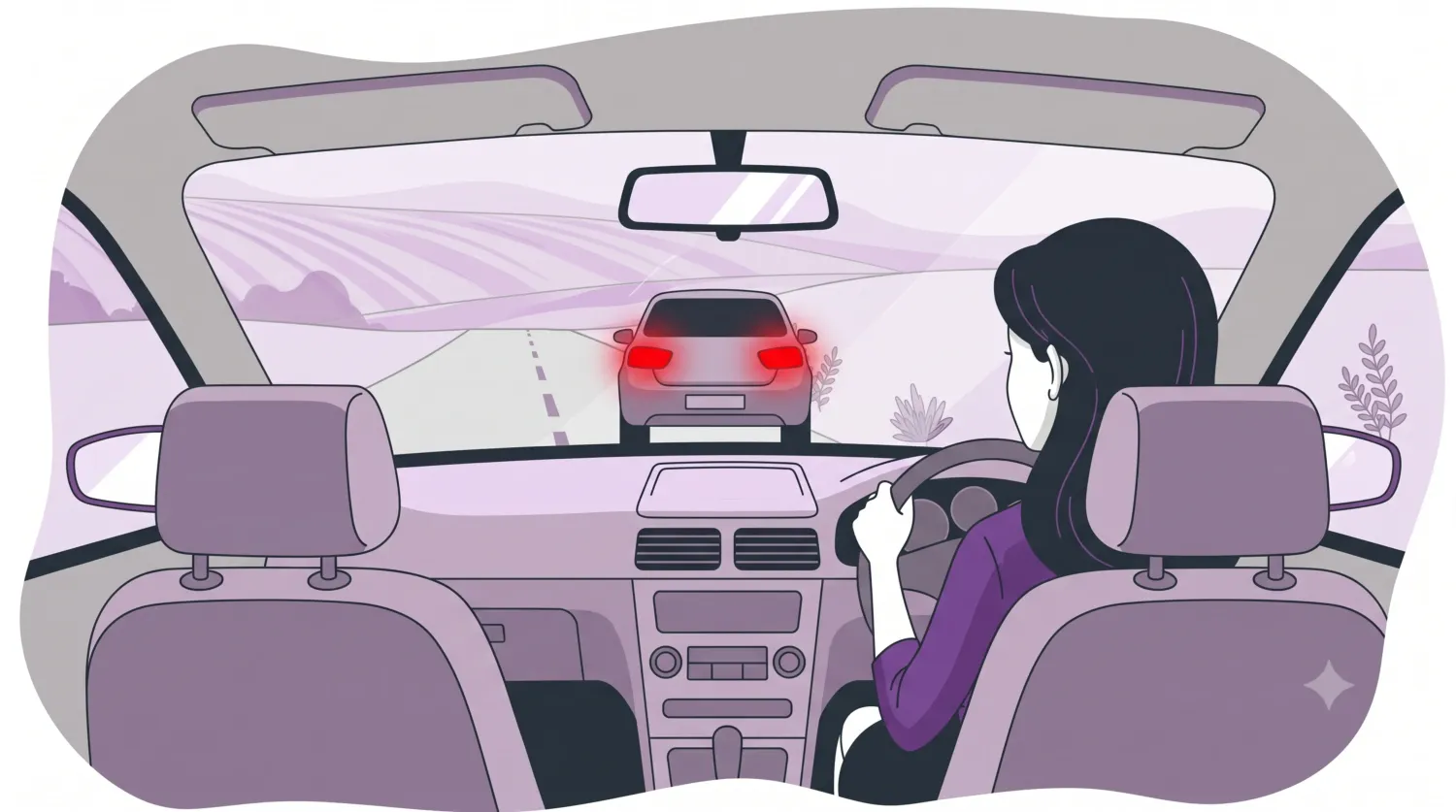
The idea is straightforward: as you drive, you simply notice anything red around you. That might be:
Road signs with red borders — speed limits, warning signs, etc.
Traffic lights
Brake lights on the car ahead
A red car passing by
You can say it quietly out loud if that helps, or just note it mentally. Either way, the point isn't the red itself — it's what noticing it does for your attention.
Why Something This Simple Helps
Anxiety tends to pull your mind away from the road and into imagined situations — the junction you're dreading further up the route, or a small mistake you made a few minutes ago that you can't stop replaying. Red Alert works by giving your attention something concrete and immediate to hold on to, right here in the present moment.
When you're actively looking for something specific, there's simply less room left for your mind to wander into anxious "what if" territory. It's a small, practical way of anchoring yourself in what's actually happening, rather than what might happen.
There's a useful side effect too. Red features heavily in exactly the things a good driver needs to notice anyway — warning signs, brake lights, traffic signals. Practising this kind of active scanning tends to sharpen general observation and hazard awareness at the same time as it calms your mind, which is a nice overlap for something so simple.
How to Try It
Start small. Give it a try for five minutes on a quiet, familiar road — ideally somewhere you already feel reasonably comfortable, rather than somewhere already stressful. Notice how your attention feels afterwards compared to before.
As it starts to feel natural, you can extend it to longer stretches of a drive, or bring it out specifically in moments you know tend to trigger anxiety — approaching a roundabout you're not keen on, for instance, or merging onto a busier road.
Like most calming techniques, this works best built up gradually rather than expecting an instant transformation. Some lessons, we might use it for a few minutes at a time. Others, a learner finds it useful for almost the whole drive. There's no right amount — just whatever helps you feel more present and less anxious in that moment.
How I've Seen It Help
I've had a few learners for whom this became a genuinely reliable tool. One learner, preparing for her test and convinced she'd freeze at the first roundabout she reached, practised this in the weeks leading up to test day. Her examiner actually commented on how good her observation was.
Another learner used to get so anxious early on that he'd forget to check his mirrors altogether. After a few lessons using this technique, his mirror checks became far more consistent, almost without him having to think about it — the habit of active scanning had simply carried over.
Neither of them found this technique magically removed their nerves. What it gave them was something practical to do with their attention, rather than letting it drift somewhere unhelpful.
It Won't Work for Everyone in the Same Way, and That's Fine
Some learners take to this immediately. Others prefer a different grounding technique entirely, like focused breathing or simply narrating what they see aloud. If Red Alert doesn't click for you, that's not a problem — it's one tool among several, not a required step.
Worth Trying, Low Pressure
If you'd like to give this a go, there's no wrong way to start. Try it on a quiet, familiar stretch of road first, and see whether it helps settle your attention. If it does, we can build it into lessons deliberately, especially around the situations that tend to make you most anxious.
If it's been a while since you've driven, or something specific knocked your confidence rather than general nerves, it might be worth reading this too: Returning to Driving After a Bad Experience.
If you'd like to talk through this or any other techniques before booking a lesson, feel free to get in touch. No pressure, no obligation. Just a conversation about what feels right for you.
Recent Posts
Subscribe now
If you'd like our newest guides and local road updates sent directly to you, please enter your details in the form to subscribe.
BLOG CATEGORIES
WHY CHOOSE US
Steve Paddy Driving School provides professional, patient automatic driving lessons across Chester, Ellesmere Port, and the surrounding areas. We specialise in helping nervous and anxious learners build lasting confidence by delivering a stress-free, supportive journey to real driving freedom.
Created with systeme.io | © Steve Paddy 2026 All Rights Reserved | Privacy policy | Cookie Policy | Terms & Conditions